
Wrestling
The double-leg takedown, from entry to top control
A double leg gathers both legs after you close distance with your feet. Start by learning where to lower your level and where to stop. The landing comes later, with a coach and a partner who knows how to fall.
The diagrams explain positions and decisions. Independent coach review is pending. Practise contact entries and finishes on mats with a qualified coach.
On this page
Illustrated checkpoints
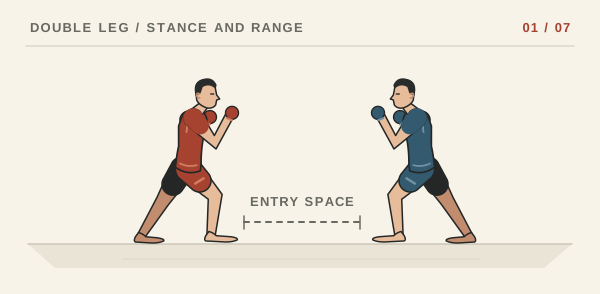
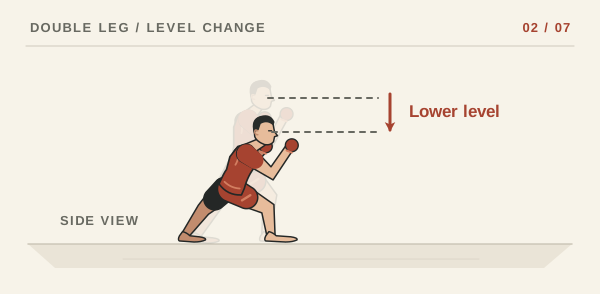
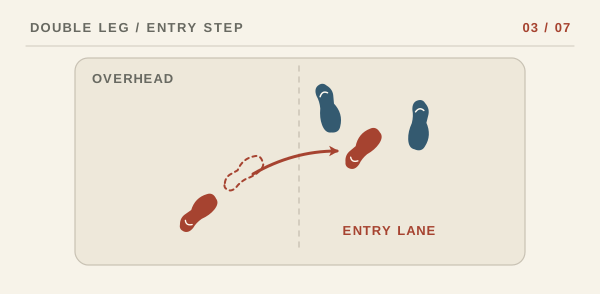
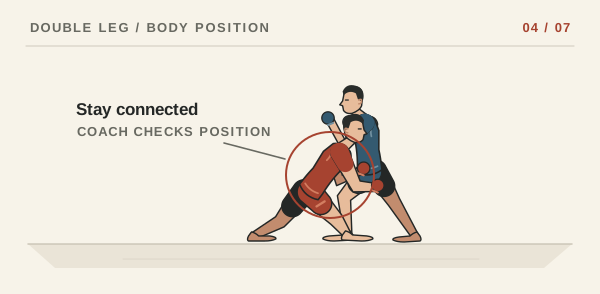
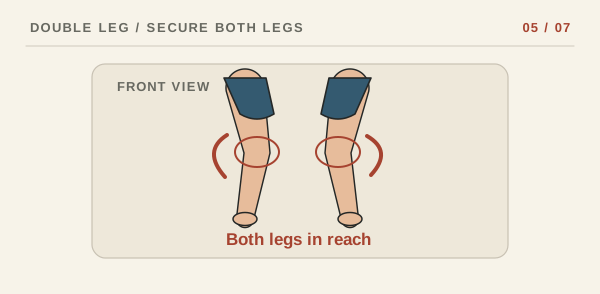
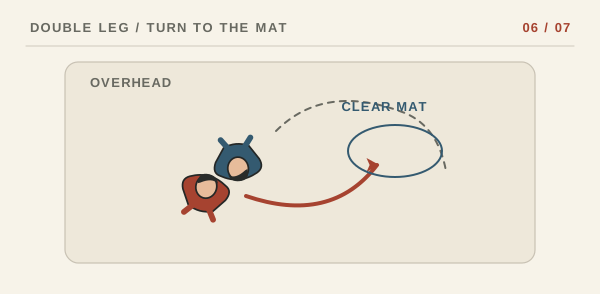
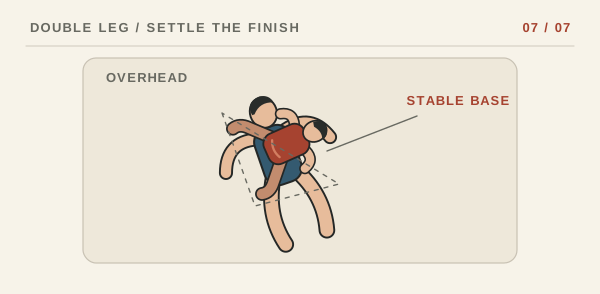
Seven observation windows follow the entry into a controlled finish. The landings and hand positions require in-person coaching.
- Find the distance. Start balanced, close enough to reach the hips with a step. Begin beyond that range and you end up diving.
- Lower your level. Bend through the knees and hips while keeping your eyes forward. The change in height happens before the forward entry.
- Take the entry step. Step between the partner's feet for this version. Bring the rear leg forward to support you on a padded surface.
- Bring the body close. Keep your hips beneath your chest and your head on the side your coach demonstrates. Neither partner should feel a load on the neck.
- Gather both legs. Connect the arms around the legs near the back of the knees. Pause with elbows close enough that you can release without pulling the partner over.
- Turn the corner together. With a coach supervising, use your feet to angle across the partner's base. Guide the agreed descent onto the mat without lifting or twisting the knees.
- Settle the landing. Keep your weight supported and identify whether a leg is trapped in guard. Hold the agreed top position, then release and change roles.
Before you shoot
You need a wrestling stance you can move from, clear mat space and a partner who agrees to the drill. USA Wrestling teaches the level change separately from the entry and includes both inside- and outside-step variations. The stages below describe an inside-step teaching version. Ask your coach to set your head position for the entry you are using.
Two common misses
If your shoulders arrive before your feet, your arms have to reach and the partner can pull the legs away. Bring the start closer and repeat the entry without a finish. If your head points towards the floor, stop before contact and level change again with your chest lifted. Never load weight through the crown of the head.
Add resistance in the right place
Do the first three stages solo on mats. Add a cooperative catch and release with the partner standing upright. When both partners can stop on cue, have a qualified coach supervise a low, guided finish and check the landing. Leave lifts, slams and full-speed entries out.