
Wrestling
Single-leg entries and first-line defense
A single leg isolates one leg instead of collecting both. Early defense moves the target or interrupts the entry. Once a partner has secured the leg, balancing and dealing with the upper-body tie become a different problem.
The diagrams explain positions and decisions. Independent coach review is pending. Practise contact entries and finishes on mats with a qualified coach.
On this page
Illustrated checkpoints
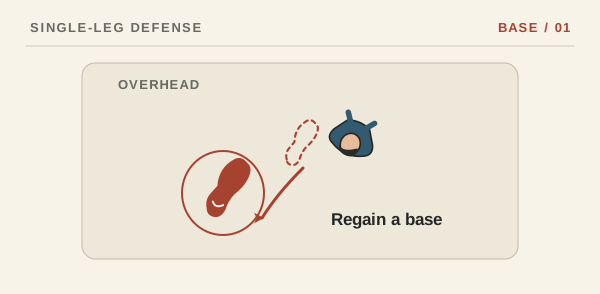
- Before the grip. Move the target as distance closes.
- After the catch. Regain balance and find the coach's chosen upper-body tie.
- Release. Stop before the trapped leg twists or a partner loses control of the landing.
Learn the catch before the finish
The attacker starts close enough to make contact without reaching. A level change brings the body to the leg. A step closes the remaining distance, then the arms connect around one leg with the head in the position the coach sets. Several inside- and outside-step entries exist. In your first rep, keep the captured foot on the mat and release on the coach's signal.
Two defensive windows
Before the grip closes, a small angle or hips-back movement can clear the target. Once the leg is secured, stay balanced over the support foot and use a coached inside tie or overhook where it fits. Trying to twist a trapped knee free can injure either partner. If the attacker has lifted the leg and you do not know the defense, call a reset.
An honest partner test
Ask the attacker to show one genuine entry and one level change without an entry. The defender moves only when distance closes. Then start from a stationary catch to examine why the earlier response has changed. Work on a mat, keep the finish out and stop before anyone has to hop toward the edge.