
Wrestling
The sprawl and the return to stance
A sprawl clears your legs from an incoming shot by moving the hips back as the attacker closes. Its job is to interrupt the entry. You may still need an angle, a tie or another defensive action to get free.
The diagrams explain positions and decisions. Independent coach review is pending. Practise contact entries and finishes on mats with a qualified coach.
On this page
Illustrated checkpoints
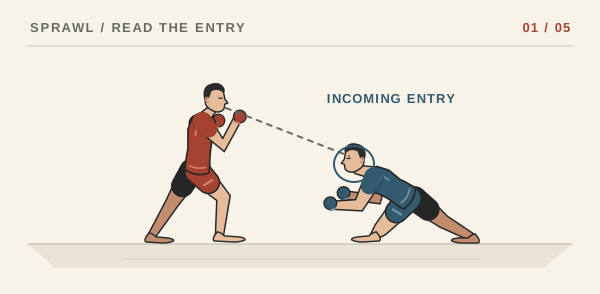
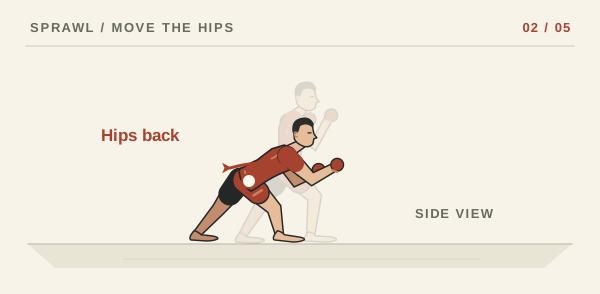
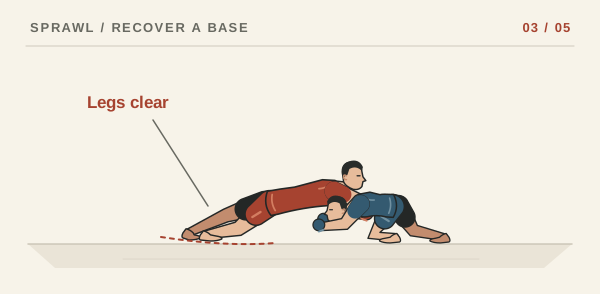
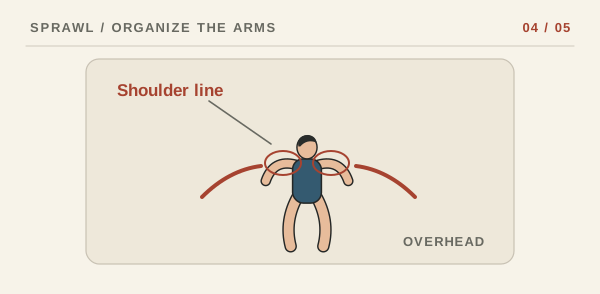
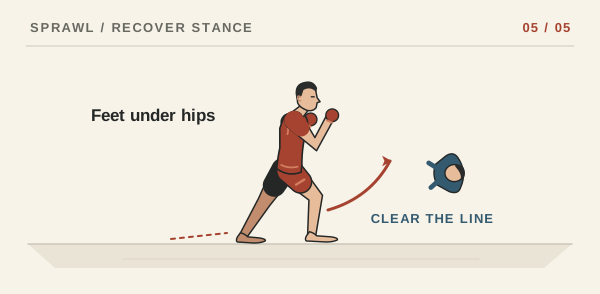
Five windows separate the entry cue, hip movement, base, shoulder line and recovery. They are orientation studies for coached practice.
- Read the shot. Notice the level change paired with a step toward your legs.
- Move the hips back. Send the feet and hips away from the attacking line without springing high into the air.
- Set the base. Keep the feet apart and the hips low enough to deny access to the legs. Avoid dropping your knees onto the partner.
- Manage upper-body contact. Keep the arms connected at the coach's chosen shoulder line. Protect the neck and avoid pulling the head down.
- Recover the stance. Once the grip has cleared, angle away and bring the feet back beneath you while facing the partner.
Read the entry
Start facing a partner in a staggered stance. Ask them to show a level change from a sensible distance, then step toward your legs slowly. A head dip on its own can be a feint. Look for the distance closing as well. A sprawl too early gives away balance before the other fighter has even taken a step.
Keep the partner comfortable
Learn the hip movement solo. In a partner rep, agree how much pressure to use and where the attack will stop. The coach should set the point of contact at the shoulder or upper torso for this exercise. Do not drive your partner's face into the mat or hang your weight from the neck.
Know when to switch defenses
A late shot can already have both hands locked behind your knees. Repeating a small backward hop may only let the partner follow. Stop the drill, show your coach the grip and work the separate recovery from that starting position. Rejoin the beginner exercise with the earlier cue.