
Ground fighting
Closed guard, open guard and half guard in MMA
Guard uses the legs to manage distance and limit what the athlete on top can do. In half guard the lower athlete still controls one of the top athlete's legs. Having guard does not by itself stop someone punching.
The diagrams explain positions and decisions. Independent coach review is pending. Practise contact entries and finishes on mats with a qualified coach.
On this page
Illustrated checkpoints
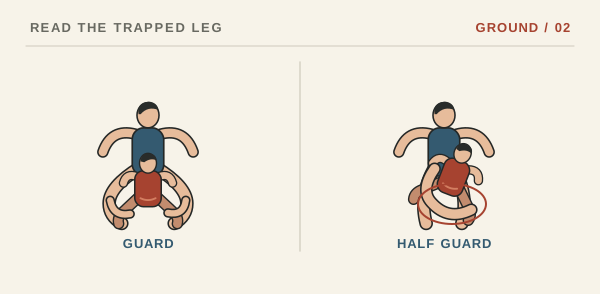
- Closed guard. Both legs encircle the torso.
- Open guard. Use mobile legs and grips to regulate distance.
- Half guard. One top leg remains caught between the lower athlete's legs.
Read the legs before the grips
In closed guard the lower athlete wraps both legs around the partner's body and usually crosses the ankles. In open guard the legs work without the ankles locked together. Butterfly guard is one example, using the insteps inside the partner's thighs when the position allows. In half guard one top leg is trapped between the lower athlete's legs while the other is free.
Why guard pulling changes in MMA
Pulling guard means deliberately going from standing to a guard position with the opponent between or engaged by the legs. A submission grappler may want that exchange. Under MMA rules it can leave the new bottom athlete underneath someone who can strike. In a beginner class, start seated to learn the position and leave standing guard pulls and jumping guard out.
Test your guard retention
Start seated while a partner walks slowly from one side toward the other. Turn your hips and recover a knee or shin between you. Next add light torso contact with a named finish such as recovered half guard. If the partner controls the hips and both shoulders, ask the coach to reset you one step earlier. Practise without strikes.