
Ground fighting
Recognize side control, mount and back control
Start with the legs. If the top athlete is past them and lies across the torso, that is a common side-control position. Sitting astride the torso is mount. Staying behind the partner and following their hips is a form of back control.
The diagrams explain positions and decisions. Independent coach review is pending. Practise contact entries and finishes on mats with a qualified coach.
On this page
Illustrated checkpoints
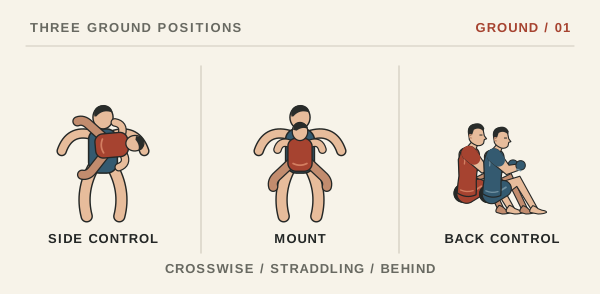
- Side control. Top athlete faces across the torso beyond the legs.
- Mount. Top athlete straddles the torso, facing the lower partner.
- Back control. Top athlete stays behind, connected to the torso and hips.
Identify what each position takes away
Side control limits the bottom athlete's ability to turn their shoulders and put their knees between the bodies. Mount puts the top athlete astride the hips or torso. Back control takes away much of the bottom athlete's view of the person behind. None holds itself. A shift of the hips can change which position the partners are actually in.
What to look for from underneath
Under side control, try to find a protected inside forearm and enough space to bring a knee in. Under mount, keep the elbows close while looking for a route back to a leg. From back control, protect the neck and address the upper-body grip before turning. A coach should teach the exact escape for the partner's grips.
Practise recognizing the change
Set up one position at a time with no strikes, neck pressure or submissions. The lower partner names the position and the nearest route to a better one. The upper partner follows one slow turn, then releases. Compare with guard and half guard so nobody mistakes a trapped leg for a completed pass.