
Ground fighting
Ground-and-pound positioning and defense
Ground-and-pound means striking while the fight is on the ground, commonly from a top position. For a beginner underneath, first recognize whether the partner has posture, a free hand and room to strike.
The diagrams explain positions and decisions. Independent coach review is pending. Practise contact entries and finishes on mats with a qualified coach.
On this page
Illustrated checkpoints
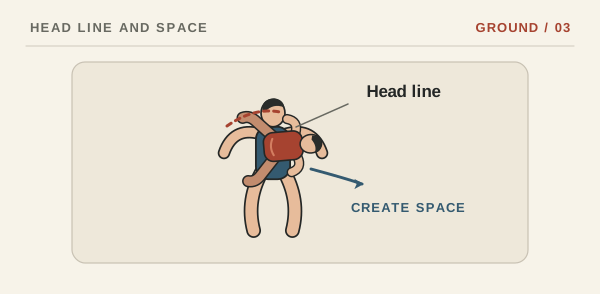
- Posture. Can the top athlete sit tall and balance?
- Free hand. Does a hand have a clear path, and can the lower athlete protect their head?
- Better position. Recover a connection or enough space to angle away and stand.
How the same guard can change
If a partner sits upright in your guard with both hands free, they can create a striking line even while your legs hold the position. A close upper-body connection can limit that space. At a longer distance, a knee or shin between you can help maintain separation or help you get up. Hanging halfway between the two leaves room for strikes without giving you an exit.
Top and bottom have different jobs
The top partner first tries to stay balanced while a hand leaves its support point. The lower partner tracks that hand, keeps the head protected and looks for a controllable wrist, inside forearm or space to move the hips. If the top athlete advances past the legs, name the new position and work its escape. Reaching for both wrists at once can uncover the head.
Demonstrate the opening without impact
Start in agreed guard with a coach watching. The top partner opens a glove and pauses beside their own shoulder to signal a free striking hand. The lower partner adjusts, then both freeze for feedback. No head contact, elbows or strikes are needed to tell whether the opening changed.