
Striking
Kicks, knees and elbows on pads
A round kick can reach at a distance where an elbow cannot. A knee needs a suitable target and enough room for the hip to move. Learn these ranges on held pads before combining them with clinch work.
The diagrams explain positions and decisions. Independent coach review is pending. Practise contact entries and finishes on mats with a qualified coach.
On this page
Illustrated checkpoints
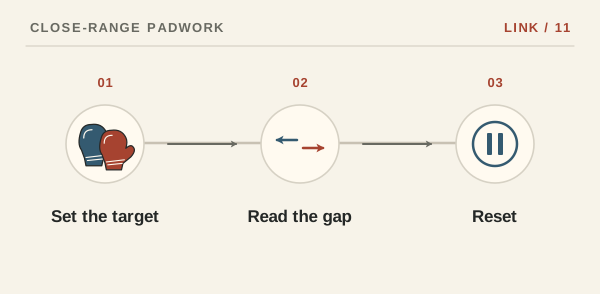
- Longer range. A kick shield marks the round-kick target.
- Closer range. The holder sets a separate body target for a knee.
- Short range. Mark the elbow's path on a coach-held pad and return to guard.
Give each weapon its own target
Ask the coach to set a kick shield for a round kick, then reset the position for a straight knee. The holder chooses the angle and confirms they are ready before every rep. To introduce an elbow, use a suitable padded target held by an experienced coach. Keep every partner's face out of the strike path.
How this differs from a Thai boxing round
Muay Thai competition recognizes punches, kicks, knees and elbows. In MMA a tall, committed kick or clinch knee may leave only one leg on the floor while the opponent can also wrestle. A beginner can first practise replacing the kicking foot and returning the hands before adding another attack.
One change at a time
Start by marking targets without striking, then add light pad contact. If the pad collapses into the holder or the striker tips forward, stop and reset the distance. Keep live knees and elbows out of this exercise. The permitted strikes in competition vary with the event and age division.