
MMA integration
From a straight punch to an inside clinch tie
A clinch entry makes sense when the opponent has closed the space your punches need. Use a protected step and upper-arm contact to find a tie. If their body stays beyond your reach, keep your stance and exit.
The diagrams explain positions and decisions. Independent coach review is pending. Practise contact entries and finishes on mats with a qualified coach.
On this page
Illustrated checkpoints
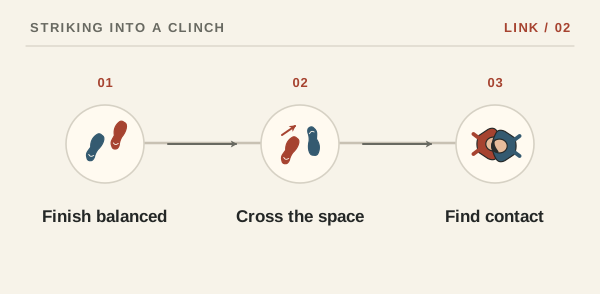
- Touch range. Recover the punch with the feet under you.
- Meet the arm. Make light upper-arm contact only if the partner has closed space.
- Find inside position. Settle a cooperative tie or step away if contact disappears.
What you need before adding a punch
Be able to release an over-under clinch on request and move one arm inside without clashing heads. The partners should already know where the coach wants head and shoulder contact. Rehearse the tie from a static start so the striking cue introduces only one new problem.
Let the distance choose the grip
Start in the open and shadow a short straight punch. The partner steps into forearm range on an agreed cue. Bring the glove back, meet the near upper arm and step your feet under you to find the inside tie. If they angle away, do not chase the neck with both arms. The safe finish for that rep is two athletes facing each other at range.
Pause at the first contact
Let the coach check whether your feet support you if the partner lets go. A lunge or outstretched elbow often means contact came from too far away. Repeat with the partner sometimes giving you the entry and sometimes stepping away. Stop at the tie without throws, neck pulls, knees or elbows.