
Striking
MMA stance vs boxing stance
Keep the balance and footwork you learned in boxing. In MMA, also leave yourself a way to lift your lead leg, cover a kick and move your hips away from a shot.
The diagrams explain positions and decisions. Independent coach review is pending. Practise contact entries and finishes on mats with a qualified coach.
On this page
Illustrated checkpoints
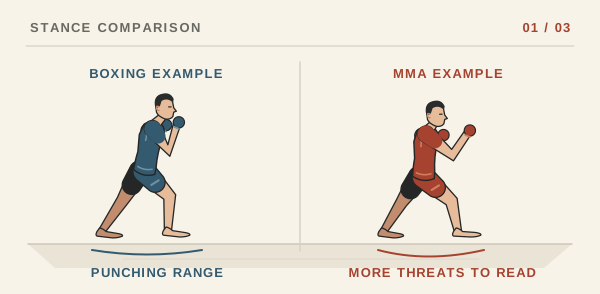
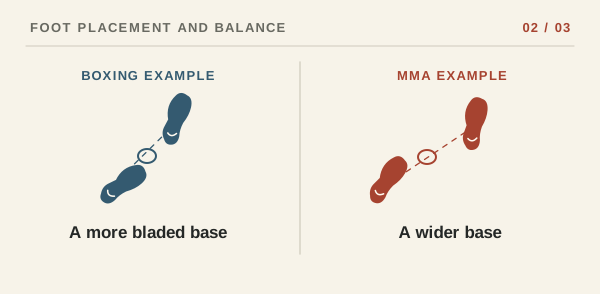
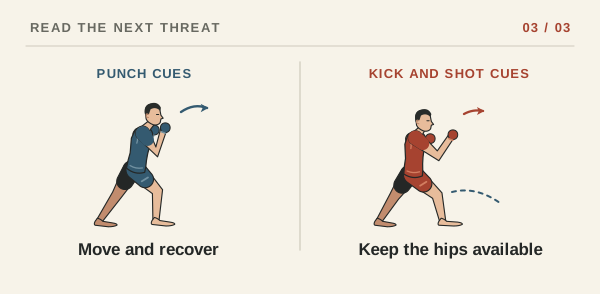
Both athletes need balance. A boxer can organize the stance around punches. An MMA athlete also needs the lead leg and hips available against kicks and takedown attempts.
- Boxing starting point. Stagger the feet enough to send and recover a straight punch without losing balance.
- MMA starting point. Keep the lead leg free enough to check and the hips available to defend an entry. The exact angle varies.
What changes when kicks and shots enter the round?
Foot position follows the task. A more side-on boxing stance can lengthen a jab. If the lead knee turns so far inward that you cannot lift and turn the shin without an extra step, a calf kick presents a different problem. Standing very square can make a straight punch easier to line up. Neither stance works for every exchange.
Weight should be movable. A planted lead foot can support a punch, yet you have to unload it to check a kick. After the rear straight, see whether you can lift that foot or step back without first rocking onto the rear heel.
How much head movement transfers?
A short slip can take your head off a jab while your eyes stay on the other fighter. A deep, rehearsed roll puts your head lower and can take it into a knee or kick. Hands tight to the temples still leave the hips available to a wrestler. Bring the guard back where you can see, cover and make contact with an entering shoulder.
Test your starting position
Have a coach call a jab, check or hips-back cue. Shadow each action, pause and take a step in either direction. If the first movement is always a weight shift, change one foot position and run the test again. No partner kicks or head contact are needed.