
MMA integration
Defend punches while keeping your hips ready
A useful MMA defense lets you answer the action after the first punch. Keep the reply to a straight punch small enough that you can still see a second punch or the opponent lowering for your legs.
The diagrams explain positions and decisions. Independent coach review is pending. Practise contact entries and finishes on mats with a qualified coach.
On this page
Illustrated checkpoints
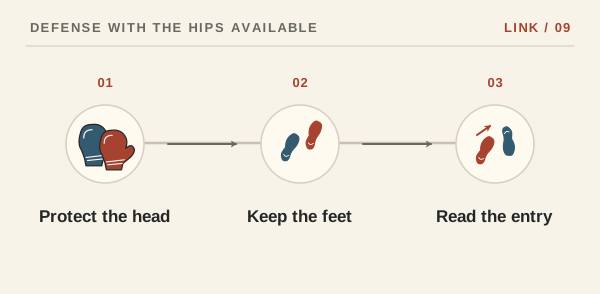
- First action. Use a compact defense and keep the eyes on the partner.
- Second punch. Keep your base under you and protect the new striking line.
- Leg entry. When the partner closes on the hips, switch to the coached wrestling response.
What to bring from boxing
Start with the short parry or guarded step that your boxing coach has already taught. Keep the non-parrying hand available. A sweeping parry across your chest can pull the shoulders away from the hips, while a long roll can leave you looking at the mat. Notice whether you could turn to face the partner if they stepped to the side.
What changes when the partner shoots
Have the partner show a straight-hand cue from outside contact range. After you defend, they either show another straight or change level and step toward a marker. Keep the guard for the second punch. For the entry, keep your eyes on the closing body, move the hips away and bring the arms to an appropriate shoulder-line defense with your coach. Do not grab the head.
Test one decision at a time
First name the second cue without moving. Then use the correct foot movement. Add light cooperative contact at the shoulders only after the response is consistent. Dropping both hands at the first feint leaves the next punch open. Sprawling at every cue means the cues are arriving too quickly. Slow down, restore the two distinct choices and repeat.