
Ground fighting
Submission fundamentals, early defense and tapping
A submission can threaten a joint or compress the neck. Learn to recognize the position, signal early and release at once before trying to escape a hold under resistance.
The diagrams explain positions and decisions. Independent coach review is pending. Practise contact entries and finishes on mats with a qualified coach.
On this page
Illustrated checkpoints
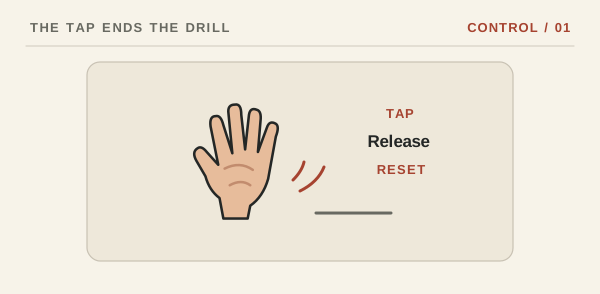
- Position. Name the joint or neck space at risk.
- Signal. Tap or speak as soon as you need the action to stop.
- Release. The partner lets go immediately and both reset.
Recognize what is being controlled
For an armbar, the arm is isolated and the elbow can be extended. A back-control choke threatens the neck from behind. The beginner's first job is to recognize when the opponent has separated an elbow, captured a shoulder line or reached around the neck. Ask a coach to show the safe stopping point without applying the finish.
Agree on a stop signal
Tap clearly on the partner where they can feel it or say “tap” or “stop.” If your hands are trapped, your voice or a foot can signal. The partner releases immediately on any signal, distress or uncertainty. Never wait for pain, loss of consciousness, a count of taps or a referee in a training room.
Practice the defense early
Start before the dangerous grip is locked. Practise bringing an elbow back to the ribs or protecting the hand entering the neck space, then release and trade roles. A late escape should be taught separately by a qualified coach with a compliant partner. Never twist against a trapped joint or practise neck compression at home.